TLDR
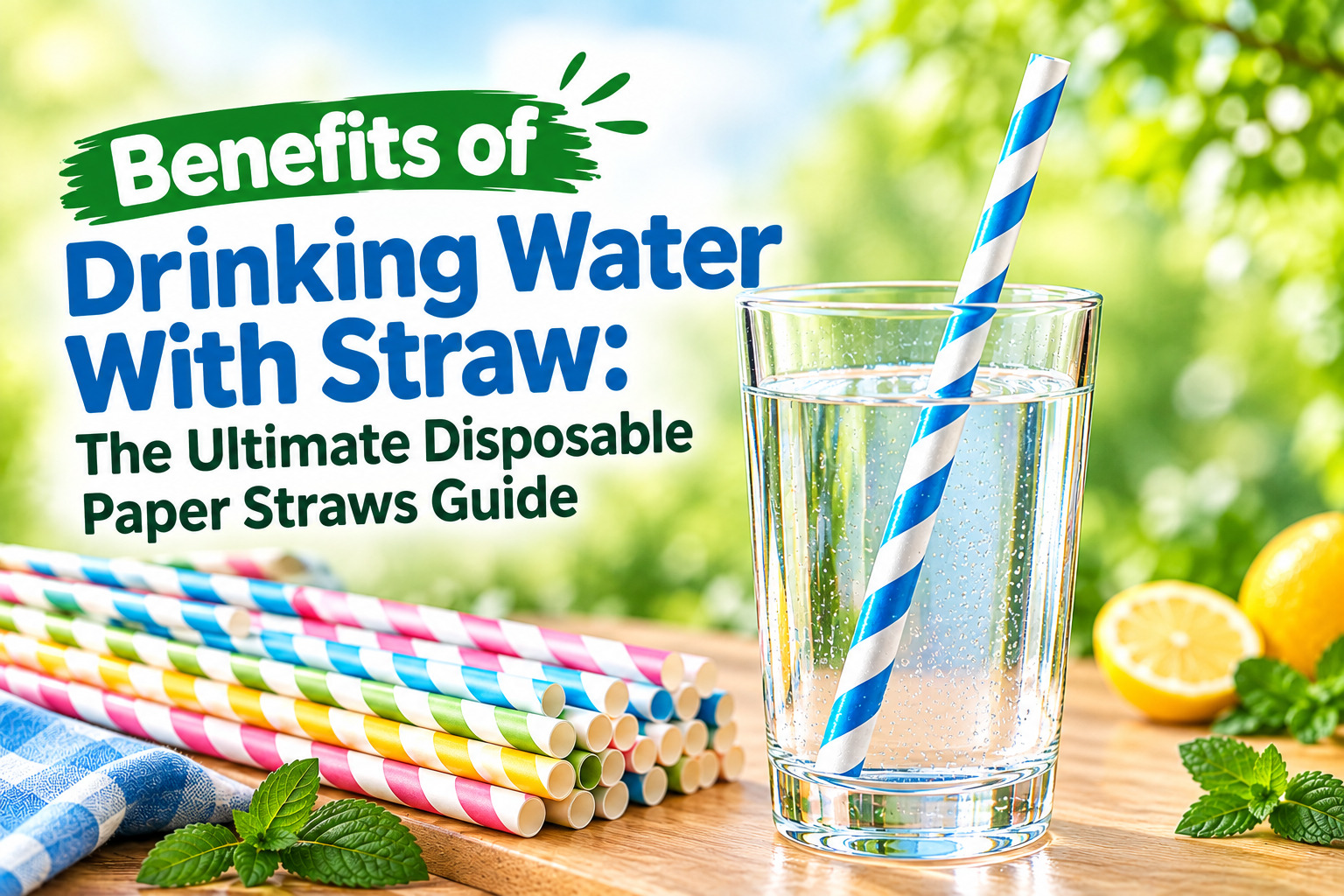
The benefits of drinking water with straw come down to three things that actually matter in daily life: less enamel contact, easier sipping for people with limited mobility, and fewer spills on the table. Paper straws have taken over the disposable drinking straws category because plastic bans made them the only practical option in most cities. The real drinking straw uses go way beyond a cafe counter into hospitals, offices, and homes managing something as ordinary as sensitive teeth.
Introduction
My grandmother used a straw for everything toward the end. Water, tea, even dal on the bad days when her jaw ached too much to chew properly. I remember asking her once why she never just drank from the glass like everyone else at the table. She just shrugged and said her dentist told her to, years ago, and she never really stopped. It took me until my late twenties, sitting in my own dentist’s chair getting a filling redone, to actually understand what she meant.
That is really the whole reason this guide exists. Most people think a straw is just a straw something you grab without thinking twice, useful mostly for iced coffee. But the benefits of drinking water with straw go deeper than convenience. Once plastic straws started disappearing from menus across the country, a lot of businesses and households had to relearn something that used to be automatic. This guide covers what a straw actually does, the types of disposable drinking straws worth knowing about, and why paper has quietly become the default almost everywhere.
What Is Drinking Water With a Straw
It sounds almost too basic to explain, but the mechanics genuinely matter. A straw pulls liquid past the front teeth and sends it closer to the back of the mouth instead of letting it wash directly across your enamel every single sip.
For plain water this barely registers as a difference. Nobody is protecting their teeth from a glass of tap water. But the moment you add anything acidic, sugary, or carbonated into the picture, that small routing change stops being trivial. Dentists have been quietly recommending straws for years for exactly this reason, long before sustainability had anything to do with the conversation.
A few things worth knowing here, some of which surprised me while researching this:
- It reduces direct contact between liquid and the front teeth, which matters more for acidic drinks than water itself.
- People with limited jaw or neck mobility often find sipping through a straw noticeably easier than tilting a full glass.
- Sipping tends to slow down how fast someone drinks, which sounds minor until you watch a toddler try to gulp from an open cup.
- Hands stay cleaner in shared settings something hospitals figured out long before cafes did.
Types of Disposable Drinking Straws
Walk into pretty much any cafe today and you will run into a handful of different straw types, each solving a slightly different problem, even if most customers never notice the distinction.
Standard Paper Straws
The thin single-layer ones handed out with iced coffee or lemonade. Light, biodegradable, and honestly not built for a long sit. Give it thirty minutes in a cold drink and it starts giving up on you.
Jumbo and Boba Straws
Wider, reinforced with extra paper layers, made for bubble tea and thick smoothies. These hold up noticeably better against pressure, which matters if you have ever tried sucking a tapioca pearl through a straw that was never meant for it.
Flavored and Colored Paper Straws
More of a presentation thing than a functional upgrade, popular at specialty cafes and parties. Nice touch, does not really change how the straw performs.
Bendable Paper Straws
The accordion fold near the top matters far more than people assume, especially in hospitals, elderly care settings, and for kids who cannot easily lean over a glass sitting upright on a table.
Why Is Drinking With a Straw Important
Here is the honest problem. Most people never think about straws until something forces the issue. A dental procedure leaves teeth sensitive for a week. A jaw injury limits how far someone can open their mouth. A parent gets tired of wiping spilled water off the same corner of the table for the third night in a row.
Add to that the wave of plastic straw bans that hit cities and states over the last few years suddenly a default option that millions of people never questioned just disappeared. Some restaurants scrambled, ordering whatever paper straw was in stock without checking if it actually matched their drink menu. Others adjusted slower, and honestly some are still figuring it out. Households changed too, quietly, for reasons that had nothing to do with any law at all just a dentist appointment or a toddler who kept spilling everything.
How Paper Straws Are Changing the Beverage Industry
Watching a business actually switch from plastic to paper is never as clean as ordering a new box off a supplier website. There is usually a messier process behind it than owners like to admit.
Research
Most places start here almost by accident someone finally reads the fine print on their local plastic ban after getting a warning notice and realizes the rules are stricter than they assumed.
Ideation
Then comes the harder question: which paper straw actually survives the drinks already on the menu without turning to mush halfway through?
Design
A cafe serving iced coffee needs a different straw wall thickness than a juice bar pushing thick mango smoothies. This is where a lot of first attempts go wrong one straw type ordered for every single drink on the menu.
Development and Build
This stage is where the real testing happens sample batches from two or three suppliers, someone on staff drinking iced tea through each one for an afternoon just to see what actually holds. According to market research, the global paper straw market was valued at USD 1.66 billion in 2025 and is projected to be worth USD 1.75 billion in 2026, growth that tracks almost exactly with how many businesses are quietly running this same trial-and-error process right now.
Launch
The ultimate decision on the straw is based on real tables and consumer input, which in the coming weeks determines whether the business proceeds with that supplier or continues to try.
What Are the Advantages of Drinking Water From a Straw
Most dentists would put protecting tooth enamel at the top of the list. Routing liquid away from the front teeth reduces daily wear it is something to care about outside of acidic drinks. And right behind that is hydration. Once I started to pay attention I noticed this with myself. Believe it or not, people drink more water because it is easier to sip through a straw automatically than to remember to raise a glass every few minutes.
Spills also count more than they get credit for. Anyone who has had to deal with a toddler, an older parent, or a patient recovering from surgery knows exactly how much a straw can stop drinks from landing on a table or a bed sheet rather than a mouth.
A straw supports those with limited mobility, making an otherwise assisted task independently manageable. This means more than it sounds like on paper. A straw also reduces the number of direct contacts between a mouth and a shared cup rim a detail most people do not think about until someone mentions it. In public places where people gather — offices, hospitals, events that detail matters.
How to Start Using Paper Straws
Plastic bans and their exceptions vary more from town to town than most business owners expect going in, so check what your city or state really requires before ordering anything in bulk.
- Match the straw to the real drink. Thin straws are good for water and iced tea, but reinforced ones are worth the extra cost for smoothies and bubble tea otherwise you get the soggy straw complaints that have customers mentioning it in a review.
- Choose a supplier that tests in real drinks, not just in a lab somewhere far away from your real menu. That gap between lab testing and real-world use shows up fast, usually in the form of a complaint nobody saw coming.
- Train front-of-house staff on storage too, since paper straws sitting in a humid stockroom soften faster and create complaints that genuinely have nothing to do with the straw quality itself.
- Then just track complaints and reorder frequency for the first couple of months. That early data tells you faster than any sales pitch whether a supplier is actually reliable long term.
| Straw Type | Best For | Typical Lifespan in Drink |
|---|---|---|
| Standard paper straw | Water, iced tea, lemonade | 20 to 30 minutes |
| Jumbo paper straw | Bubble tea, thick smoothies | 30 to 45 minutes |
| Bendable paper straw | Hospitals, elderly care, children | 20 to 30 minutes |
| Flavored paper straw | Specialty cafes, events | 15 to 25 minutes |
A cafe chain in Pune ran into this exact problem last year. Every branch was using the same thin standard straw for everything on the menu iced coffee, lemonade, and their new bubble tea line. The bubble tea complaints piled up fast, mostly about the straw collapsing before the drink was even half finished. Once they switched to a reinforced jumbo straw just for that one drink category, the complaints dropped off almost immediately. Industry analysis on foodservice straw decisions notes that paper straws now check the regulatory box while matching what eco-aware customers expect and that cafe chain is a pretty ordinary example of exactly that shift playing out on the ground.
The Future of Paper Straws
Manufacturers are working on water-resistant coatings that skip the thin plastic lining older paper straws sometimes used, which closes a loophole critics have pointed at for years. Adoption is also spreading well past food service, with hospitals, schools, and offices increasingly stocking paper straws as a default rather than in response to a local ban.
Production is also moving closer to where straws are used in reality, cutting down on shipping time and providing businesses with fresher stock instead of straws that sat in a warehouse for months and lost their shape. None of this means the problems are solved though. Paper straws still soften faster than plastic in very cold or very acidic drinks, and the cost per unit remains higher in most regions something businesses need to plan around honestly instead of pretending it away.
Why Anirudh Agro Industries
A straw feels like a small detail right up until you are the business fielding complaints about soggy paper falling apart mid-drink. Anirudh Agro Industries tests straws against real beverages, not just paper cups sitting on a shelf, so cafes, hospitals, and households end up with something that actually holds for the whole drink, not just the first five minutes.
If your business is switching from plastic or simply looking for a more reliable supplier, reach out to Anirudh Agro Industries for samples matched to your actual drink menu not a generic catalog pick.
Further reading on where this market is heading can be found in this paper straw market growth report and this comparison of paper versus plastic straws for businesses for anyone weighing the switch in 2026.