TL;DR
- Paper outside, a thin plastic film inside.
- Chai needs 65 to 100 ml, tea or coffee 150 to 250 ml, takeaway 350 ml plus.
- Recycling is only possible at the right mill, but most cups never end up there.
- Leaking cup? Check the bottom seal first.
A paper cup gets about ten minutes of attention in its whole life. Someone pours chai, drinks it, throws it. Nobody thinks about it again. Unless it leaks. Then suddenly everybody has an opinion.
We get those opinions at AAI quite regularly. Canteen managers, café owners, caterers. Most of them are asking some version of the same three things: what size, is it really eco-friendly and why did the last batch fail.
So I’m just trying to sum up everything you might want to know in one spot. Plain language. No brochure talk.
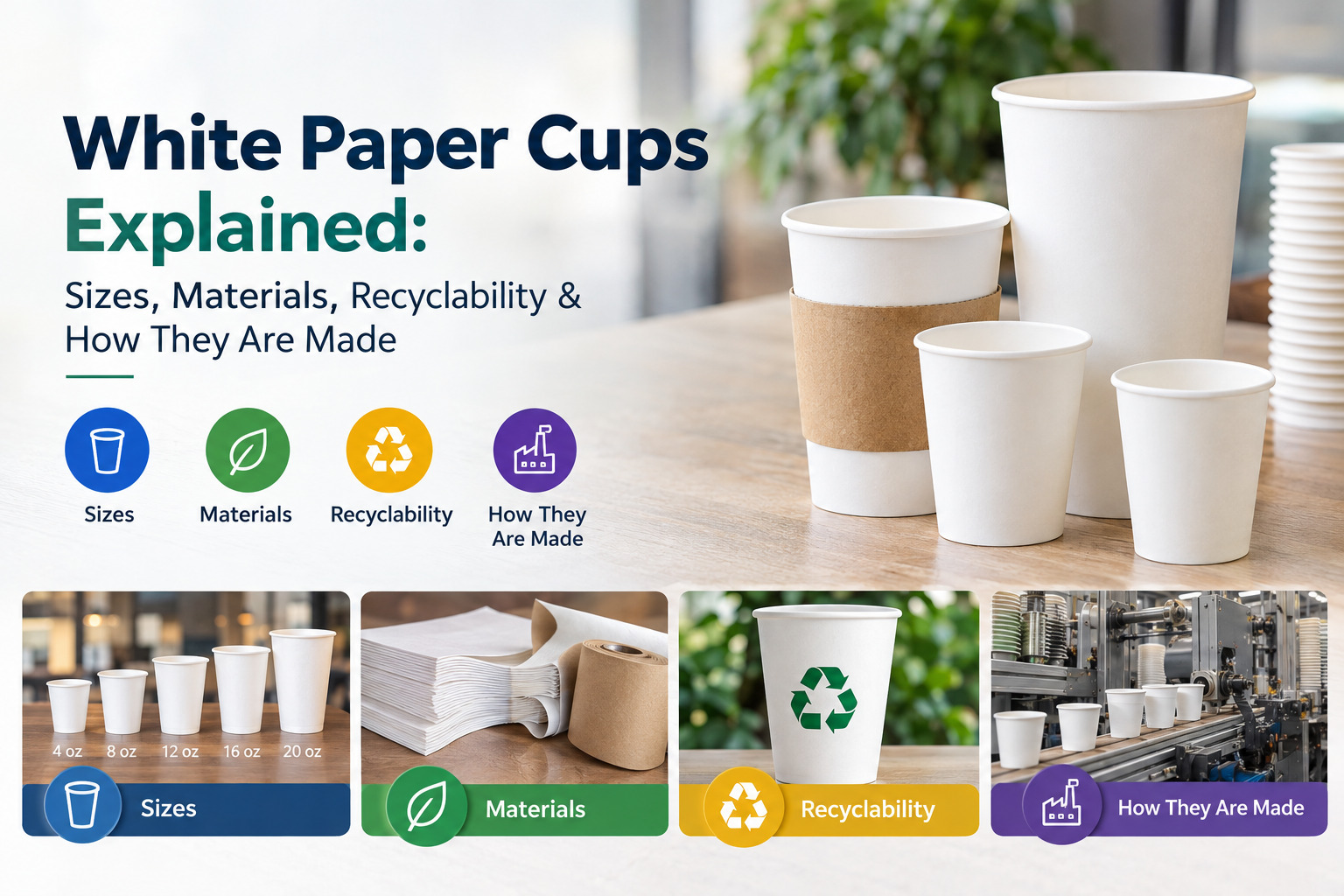
What Are White Paper Cups?
See, the name says most of it. White, because the board is bleached. Paper, because that’s the body. Inside there’s a thin waterproof coat so the drink doesn’t soak through. Outside, nothing printed.
People pick plain for practical reasons mostly. A café slaps its own sticker on. Hospitals want something that just looks clean. Caterers want 20,000 by Friday and printing would take two weeks they don’t have.
Plain is a bit cheaper too. Quicker to dispatch as well.
My advice is simple. Until your menu and your monthly volumes settle down, stay plain. Print later.
Kraft or white? Brown kraft cups give a rustic appearance and do not show up any marks on them. White cups complement the printed label very well and fit perfectly in offices and hospitals.
Paper Cup Raw Material: Board, Lining and Seam
Honestly, the paper cup raw material list is short. Three things.
The board first. People in the trade call this paper cupstock. Based on the capacity of the cup, the weight usually ranges from 150 to 350 GSM. Food cups are made out of virgin fibre because the recycled pulp may still contain residual ink. Not something you want near a drink.
Then the lining. Without it the board would go soggy in a few minutes. You’ll mostly see:
- PE (polyethylene), the cheap and common one
- PLA, plant-based and compostable but only in industrial composting
- Water-based coatings, the newer kind that’s easier to recycle
And the seam. It’s sealed with heat, so there’s hardly any glue. Plain cups barely have ink either.
One small thing. Don’t let a supplier talk you into very light board for big hot cups just to save a few paise. It bends in the hand. Customers notice that faster than you’d think.
One more thing. If your tea starts tasting a little waxy after you change suppliers, look at the cup lining first. This is often where things go wrong.
Paper Cup Manufacturing on the Factory Floor
People imagine some huge plant. Actually a cup line is fairly compact. One forming machine can sit in a small unit and still make dozens of cups a minute.
The order goes roughly like this:
- Board gets its lining, usually at a separate lamination unit
- Printing, only if the cup is branded (white cups skip it)
- Die cutting, which turns the roll into curved side pieces plus a narrow strip for bases
- Forming, where each piece is wrapped into a cone and the side is sealed
- The bottom disc goes in and gets sealed
- The rim is curled
- Leak check, count, pack in sleeves
Out of all that, step 5 is where paper cup manufacturing usually goes wrong. At AAI, whenever a leak complaint comes in, the first thing we look at is the bottom seal. If the heat is even slightly low, the cup looks totally fine and then gives up a few minutes into hot tea.
You can judge a batch without visiting any factory. Rims should be round, not oval. Side seams should lie flat and straight. A cup set down on the table shouldn’t wobble on its base.
Speed is overrated, by the way. A fast machine with inconsistent seals is worse than a slower one that seals properly every single time.
Picking the Right Paper Cup Size
Most of the time, first orders are too big. Bigger looks generous on the counter. But chai cools quickly and you’re paying for paper nobody uses.
| Size | Roughly | Use it for | Who usually orders it |
|---|---|---|---|
| 65 to 90 ml | 2 to 3 oz | Cutting chai, tastings, espresso | Tea stalls, sampling counters |
| 110 to 150 ml | 4 to 5 oz | Regular tea, water at events | Offices, caterers |
| 200 to 250 ml | 7 to 8 oz | Coffee, soft drinks, buttermilk | Cafés, canteens, QSRs |
| 300 to 350 ml | 10 to 12 oz | Takeaway coffee, cold drinks | Cafés, cloud kitchens |
| 450 to 500 ml | 16 oz | Cold coffee, shakes, juices | Juice bars, dessert shops |
Hot drinks need space at the top. A cup filled right to the rim with boiling tea won’t make it to the table without spilling.
For an office, the paper cup size question is easy. Two sizes are usually enough. A small one for tea. A 200 to 250 ml one for coffee and water. Less stock to manage, fewer half-empty cartons.
Wall type is the other decision. For cold drinks and quick chai, a single wall cup does the job. If customers will be holding hot coffee for a while, go with double wall. The layer of air between the two walls keeps their fingers from getting too hot. Ripple wall cups are worth it when you want a firmer grip and a cup that looks a little more premium. In my experience most cafés start with single wall and switch to double once coffee goes on the menu.
Paper Cup Recycling: What Really Happens After the Bin
This is the worst part. Yes, a cup is mostly paper. No, that doesn’t make it easy to recycle.
The plastic film is bonded to the board. Normal paper mills mostly can’t separate it, so they don’t want cups. Specialist mills can. They pulp the cup, recover the fibre and remove the plastic. Leftover chai inside makes the whole thing messier.
India’s single-use plastic ban started on 1 July 2022. Plastic-lined paper cups weren’t on that list. A lot of businesses switched over almost overnight. Environmental groups have questioned since then how green that switch really was.
If you actually want to improve paper cup recycling at your place, start here:
- Put a separate bin for cups near the pantry or chai counter and empty it daily
- Find a recycler who takes lined paper
- At events, keep the bin where people finish their drink, not near the exit
- Ask about PLA or water-based linings if you’re making green claims
- Please don’t write “biodegradable” on a PE-lined cup. It isn’t.
Water-based linings still cost more than PE. The gap keeps shrinking though, so ask for samples before your next big order.
Before You Place a Bulk Order
Quick checklist. Takes ten minutes.
- Hot drinks, cold or both
- Size from the chart above, leave room at the top
- GSM in writing
- PE for price, PLA or water-based for green claims
- Food-grade test reports
- Hot water test (boiling water, wait ten minutes, squeeze gently, look at the base)
- Dry storage, cartons off the floor
The hot water test costs nothing. It’s still the best quality check I know.
How to Read a Paper Cup Quotation
When you compare quotes for white paper cups, two can show the same number and still be completely different deals. Before comparing, check:
- Is the price per piece, per 1,000 or per carton
- Are GSM and lining written down
- Cups per sleeve and sleeves per carton
- Minimum order and delivery time
- Whether food-grade reports come with it
Ask for 50 samples, not 5. Five cups can all turn out fine by luck.
If one quote is way cheaper than the others, something changed. Usually the board, the lining or the count in the carton.
Conclusion
That’s really it. Good board, a proper lining, the right size and a bottom seal that holds. Get those four right and nobody will talk about your cups. Which is exactly the point.
Want samples or a price for a bulk order? Our team will help.
FAQs
Which GSM will do for my purposes?
It is best to select small teacups at 150 to 210 GSM. In case you need coffee or takeaway cups, then go for higher GSM such as 230 or more.
Are white paper cups suitable for hot beverages?
They are safe to use as far as the board and the lining are of high quality. Leave room at the top of the cup rather than filling it to the brim. If you have beverages that are too hot, then it is better to use double wall cups or sleeves.
Can paper cups be used in a microwave?
Better not. The lining and seals aren’t made for it. Heat the drink separately and pour.
Why does a paper cup sometimes smell?
Damp storage, mostly. Sometimes a cheap lining. If a fresh carton smells, tell the supplier before using it.
Is a white cup more hygienic than kraft?
Not really. Both are food-grade when made properly. White just shows dirt more easily, which some kitchens actually prefer because problems are easy to spot.
Are paper cups biodegradable?
The paper part, yes. A PE-lined cup as a whole, no. PLA-lined ones compost, but only in industrial facilities.