TL;DR
- The cost of a simple paper tea cup in bulk ranges from approximately ₹0.15 to ₹0.60 per unit. For larger size 250ml cups, the cost could be as high as ₹1.50.
- Final price is affected directly by the size of the cup, paper thickness (GSM), coating, and printing.
- Since July 2022, plastic cups have been banned throughout India. In addition to paper cups, kulhads and bagasse based cups are other options available for companies to utilize.
- Printed cups are more expensive than plain cups. However, they can help you promote your brand with each cup served.
- Always request a sample before placing a bulk order.
First, a Small Confession
Anirudh Agro receives numerous inquiries each week regarding the cost of disposable tea cups.
A simple question with an often complicated answer. Although both cups can be used for serving beverages, a 55 ml cup and a 250 ml cup will vary in cost.
I believe that this is why I believed it would be helpful for me to combine all of the relevant information into a single location.
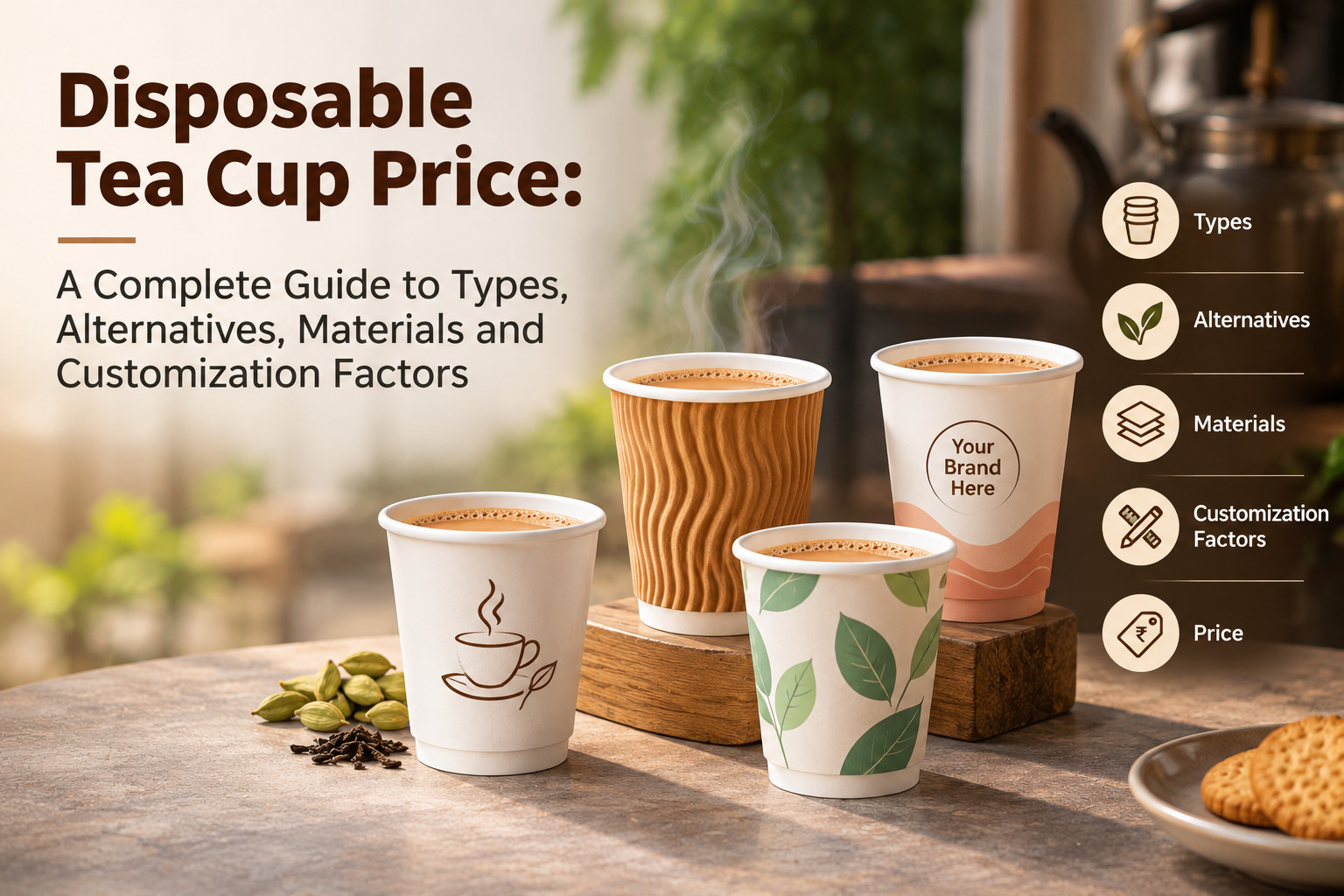
In this tutorial, we will take a closer look at the pricing of disposable tea cups, the various types available, the materials that go into making disposable tea cups, and the variables that can impact the price of a disposable tea cup. We’ll also examine the differences between having your own logo or design printed on a disposable tea cup.
Whether your business is a tea stall, canteen, café or catering, being aware of these aspects will allow you to make the correct choice when it comes to selecting a cup while keeping costs within reason.
What Is the Disposable Tea Cup Price in India Right Now?
Let’s start with the prices.
The following are average prices for wholesale quantities of plain, single-walled paper cups. Although the prices listed below provide an estimate of what you can expect to pay for each item, they should not be considered as firm quotes from suppliers.
| Cup Size | Where It Is Used | Approx. Price Per Piece (Plain, Bulk) |
|---|---|---|
| 50-55 ml | Cutting Chai | Rs. 0.15 – Rs. 0.20 |
| 65-70 ml | Tea stalls and offices | Rs. 0.21 – Rs. 0.24 |
| 80-100 ml | Regular Full Tea | Rs. 0.30 – Rs. 0.35 |
| 130-150 ml | Canteens and Coffee | Rs. 0.38 – Rs. 0.57 |
| 250 ml | Café Take Away | Rs. 0.96 – Rs. 1.50 |
| 150 ml ripple | Premium Hot Drinks | around Rs. 1.00 |
The price for printed cups is typically higher than for unprinted cups. A 100ml unprinted cup that costs about ₹0.32 in the wholesale markets viewed had an estimated cost of about ₹0.50 when printed. A compostable PLA lined cup with a capacity of 210ml was priced at about ₹1.50 or higher in the same markets.
However, the listed price is only a portion of the cost. There are also several other factors that could alter the amount you ultimately spend.
- Raw material cost: The price of paper varies depending on raw materials. What you pay in March will most likely differ from what you pay in November.
- Cup quality: Just because one cup is 3 paise cheaper than another doesn’t mean it will be a better value. If the cup leaks and spoils your customers’ experience, the savings made on the purchase were not worth the loss of business.
- Order size: Per-unit cost is typically lower when purchasing 10,000 units of an item versus purchasing 100,000 units.
- Transport and storage: Paper cups are lightweight and therefore don’t require much energy to move around. However, because they are bulky items, they take up a great deal of room when being transported, and that extra space increases total cost.
- Supplier location: The cost of a single-use tea cup from a company based out of state will likely differ from the cost you would find within your area.
Our paper cup page will show you the various sizes we offer so that you can see how they compare to what you are using now.
Tea Cup Types You Will Actually Come Across
The most common way to classify the many types of disposable tea cups is by understanding a few of the primary differences.
Typically, you will want to look at the overall dimensions of your project, how it is constructed from a material standpoint (e.g., whether it has a solid or hollow wall), and what it looks like.
By Size
- 55–65 ml: A common volume used for serving cut-chai at small roadside tea stalls (tapris), and on railway platforms.
- 80–100 ml: Suitable for regular tea servings in offices and small businesses.
- 120–150 ml: Commonly used in canteens for coffee and drinks such as masala milk.
- More than 200 ml: Cafes usually prefer this size for takeaway drinks, cold drinks, and lassi.
By Wall Type
- Single-wall cups: Made using only one layer of paper. Typically the most common and least expensive choice when it comes to disposable cups.
- Double-walled cups: Have two layers of paper, which provide extra insulation and allow for easier handling of hot liquids.
- Ripple wall cups: Have a textured exterior that allows for a much more comfortable grip and provides an enhanced, high-quality look. These are also more expensive than standard single wall cups.
By Appearance
- Plain white cups
- Stock-printed designs, including Spectra printed cups
- Fully customised cups with your own brand name, logo or artwork
We produce standard, ridged, Spectra-printed, and plain white paper cups that come in a variety of sizes (from about 55ml up to 350ml).
From our experience, coffee shops (cafes) usually select larger sized cups for the type of drinks that are offered in these locations; whereas, tea stalls typically opt for smaller cup sizes based upon what types of drinks are available at their location.
Materials and How They Affect the Price
Paper cups vary in how they are constructed. The materials used to make the cup (paper), what it is lined with (coating) and how it is assembled can affect the cost of the finished product.
Paper Board
Paper thickness is measured in GSM, which stands for grams per square metre.
Paperboard utilized for making tea cups typically falls within a GSM range of 150 to 210. Generally, as the GSM increases, so does the thickness of the paper and the firmness of the resulting cup. However, this increase in GSM also raises the price of the material used. This is the very first thing you should check when comparing prices among various manufacturers.
Coating
Because paper absorbs fluids easily, the interior of a paper cup requires a protective layer.
PE (plastic) coatings are often used for this application. Other options include PLA coatings and water-based coatings, though these alternatives usually have higher costs associated with them. The coating is important because it helps the cup hold liquids without leaking.
Base and Rim Quality
The base and rim may seem like small things, but they are important in terms of how you use the cup every day.
A properly sealed base will help avoid leaks, while an adequately finished rim can make holding and drinking out of the cup more comfortable.
The best way to evaluate this aspect is to obtain a sample and use it to hold hot tea for a period of time to see how long it remains hot a much better method than judging from an image of the product.
Before comparing products offered by two potential suppliers that appear identical, make sure they both use the same GSM. If one supplier’s price is lower, it is possible they have used a thinner type of paper. Always compare specifications before making a decision.
Paper Cups for Chai: Safe or Unsafe?
This question is asked frequently, especially after individuals have seen conversations about paper cups on WhatsApp.
The concern mainly comes from research conducted by IIT Kharagpur in 2020. A research group used boiling hot water (about 85-90 degrees Celsius) on paper coffee cups for 15 minutes, and reported that after this period there were about 25,000 tiny pieces of plastic in each 100 milliliters of fluid, associated with the internal coating of the cup. The study is now being talked about in relation to the safety of using disposable paper cups.
Several practical factors are worth considering before selecting which type of cup to use for a hot drink:
- Disposable cups are intended for immediate consumption of hot beverages (tea), rather than long term storage.
- Avoid reheating tea in a disposable cup. Never put it in a microwave.
- Inquire about the interior coating of the cup. For those who offer hot beverages daily, there are two types of coatings to consider: PLA (polylactic acid) and water-based coatings.
- When choosing a manufacturer, find one that uses food-grade paper board. If there’s an unusual ink odor coming from the cup, it should be investigated.
The banning of single-use plastic cups makes paper cups a viable alternative for most tea companies. Before ordering paper cups, however, it is still necessary to check the materials and coatings that go into making those cups.
Alternatives to Disposable Plastic Cups: What Are Your Options?
The Indian government has banned nineteen types of single-use plastic products starting July 1st, 2022. Among these products were plastic cups and glasses. The production, storage, and sales of these products are banned, though many local merchants may continue to sell them.
There are other choices available to businesses seeking options:
| Option | Best For | Things to Consider |
|---|---|---|
| Paper cup | Daily drinks such as tea, coffee, etc. | Lining of the paper and GSM. |
| Kulhad (clay) | Traditional flavor, special events, eating out. | Heavier than other options, may be damaged while being shipped. |
| Bagasse cup | Eco-conscious events and businesses. | More expensive and less likely to have small size options. |
| PLA-lined paper cup | Compostable options for brands. | More expensive. |
| Steel or glass | Offices and eating out settings. | Need to be washed using water and labor. |
Paper cups provide an economical and efficient solution to serve hundreds of customers per day at a high volume counter.
Kulhad cups provide an appropriate choice of tableware for businesses who wish to provide a “traditional” chai experience. However, bagasse may be better suited to plates and bowls as opposed to the small size of tea cups.
The decision will depend mostly on the way you deliver service to your clients, and the options available within your financial constraints.
Customised Tea Cups: What Decides the Cost?
This is where buyers often get confused. When someone looks at the price of plain disposable tea cups and then requests a four-color logo on 5,000 pieces, the quote for the printed version may vary significantly from what they had anticipated. The total cost of your order will depend on several factors, as there are extra fees for custom printing.
Quantity
Setup costs associated with printing are distributed across the units ordered. As you purchase fewer cups, those setup costs are spread across fewer units, which makes the unit price per cup higher.
Many manufacturing companies require a minimum order size of 5,000 to 50,000 items for a custom product. Online printing services can be ordered with a minimum of 500 items.
Number of Colours
A one-color logo is typically less expensive than using multiple colors. Using many colors can raise printing costs.
Print Coverage
The difference lies in whether you print a small logo onto one side of the cup, or cover the whole thing with your own custom design. The more printing coverage you need, the more it can affect the cost.
Cup Size and Wall Type
The type of cup used to print the design on can influence the price. Printed ripple-wall cups are typically more expensive than standard printed cups.
Design Changes
Changing the artwork may mean printing with a different set of plates and/or performing other setup for each print run. This can increase total cost, especially if you continue to make changes to your design from one printing order to another.
Delivery Time
When there is urgency for a customer to receive their order, it will most likely require adjustment of production schedules. The urgent nature of the request may also increase the cost of the final quotation.
Is Custom Printing Worth It?
Consider how customers actually use your cups.
As customers walk along roads, sit at desks, or talk with others, they might be holding onto their coffee cups for five to ten minutes. At this point, they can see the name of your business and its logo on their cups.
A few cents more per cup provides you with an additional opportunity to expose your brand to your target audience.
Anirudh Agro is a company that prints business logo designs and custom designs onto cups and glasses.
If you want to create a custom tea cup design, send us an image of your artwork, along with the size of the tea cup you wish to purchase. After receiving this information we can advise you as to whether it would make sense to go with a custom designed tea cup based on the quantity you plan to order, or whether it is better to begin with stock printing.
So, How Should You Choose?
Before placing a bulk order, there are a few things worth checking.
- First, determine the correct size. See what amount of tea you will use in each cup. Do not select a size based on cost alone.
- Decide whether to use plain or printed cups this will give you a general idea of what to expect in terms of pricing.
- Ask about GSM and lining. Get these specifications from the supplier in writing.
- Request samples to find out if your cups will leak, become soft, or be uncomfortable when used with hot tea. Fill a sample cup with hot tea, let it sit for five minutes, then check for leaking, softness, or discomfort.
- Obtain a price quote from at least two or three potential suppliers. When comparing quotes, make sure the specification of each cup offered is exactly the same as the one you want to purchase.
The cheapest option does not necessarily mean it is the most suitable. It must be capable of holding its shape, preventing any form of leakage, and arriving at your location within the required time frame.
Just let us know what you’re looking for, in terms of both size and quantity, and we’ll provide a price quote.
Which size is best for a tea stall?
65 ml for cutting chai and 100 ml for full tea cover most stalls.
Are printed cups fine for hot tea?
The print sits on the outside of the cup. What touches your tea is the inner lining, so ask about that.
Can I order a small quantity of custom cups?
You can ask, but the per piece rate will be higher on small runs.