Key Takeaways
- First, select your food wrap according to food type and then according to your brand, since any wrapping paper roll that either leaks or tears will make all other design efforts obsolete.
- Packages that are environmentally friendly have become a must-have in consumer preferences, especially in cases of delivery-based and fast-food chains.
- The most effective approach to custom food packaging design is to choose the print quality, GSM and coating type at once rather than separately.
- Small details like roll width, ink type and storage conditions quietly decide whether your packaging holds up in real kitchens.
- Testing a sample roll under your actual menu conditions before a bulk order saves far more money than it costs.
Anyone who has run a bakery, cloud kitchen or QSR counter knows the moment. A customer opens their order and the wrap is soaked through with oil or the print has smudged or the paper has torn at the seam. The food inside might be perfect but the first impression is already damaged. That first impression is exactly what a food wrapping paper roll is responsible for, and it’s why so many food businesses in India are rethinking how they choose one.
This guide walks through what actually matters when picking a wrap for custom food packaging, from the material itself to the design choices layered on top of it.
Start With the Food, Not the Design
It’s tempting to pick a wrap based on how the print will look, but the paper has to survive the food first. A roti wrap and a burger wrap don’t need the same paper. Dry, low-oil items like parathas or bakery snacks can get away with a basic butter paper roll. Anything that contains sauce, cheese or fried batter needs a silicone or wax-coated roll that can hold back the grease and moisture until the product is delivered.
Neglecting to use it is the most common blunder business owners commit. Even the most beautiful print will turn out see-through and sticky in twenty minutes, causing more harm to the brand than any simple paper product could do.
Why Eco-Friendly Packaging Is Becoming the Default
Sustainability was once an optional attribute of a company’s marketing. Today, however, it is increasingly becoming a basic requirement from customers, especially the younger generations. While the inherent biodegradability of paper is already a benefit, a proper coating plays an important role in creating an image of an eco-friendly brand, especially since there exist food-safe and biodegradable coatings such as wax or silicone.
Businesses that source eco friendly packaging also tend to face fewer compliance headaches. Regulators in India have been tightening rules around single-use plastics, and paper-based wraps sidestep most of that pressure while still doing the job a plastic wrap would.
Designing Custom Food Packaging That People Notice
Once the material is sorted, design is where a wrap starts working for the brand instead of just holding the food. A few things separate packaging that gets remembered from packaging that gets thrown away without a second glance:
- Contrast and legibility. Logos and taglines need to survive being folded, creased and handled with wet hands, so bold, simple designs outperform intricate ones.
- Consistent branding across formats. A wrap that matches your cups, bags and containers builds recognition faster than a wrap that looks disconnected from everything else in the order.
- Food-safe inks. Printed food packaging designs have to use inks that won’t migrate into the food, which is a standard most low-cost printers cut corners on.
- Practical sizing. A print that works well on a two-dimensional piece may not be visible when the wrap is used in a folded position, so it’s necessary to test the wrap in its folded form before approving it on the computer screen.
Companies that need cups, containers and bags to form a single identity with the wrap should have the products customized together, rather than purchased separately.
Food Packaging Tips Before You Commit to a Bulk Order
A few practical food packaging tips tend to save businesses from expensive mistakes:
- Always request a sample roll and test it against your greasiest, heaviest menu item, not your driest one.
- Confirm the GSM and coating type in writing rather than relying on a verbal description from the supplier.
- Check the roll width against your actual food size. A wrap that’s too narrow forces double-wrapping, which quietly doubles your cost per order.
- Ask for FSSAI food-contact compliance documentation upfront. The Food Safety and Standards Authority of India sets clear requirements for what can and can’t touch food directly, and any manufacturer worth ordering from should have this ready without being chased for it.
- Store rolls in a dry, temperature-controlled space. Coated papers can lose their non-stick or grease-resistant properties if they sit in humid storage for too long.
Rolls, Sheets or Foil: Picking the Right Format
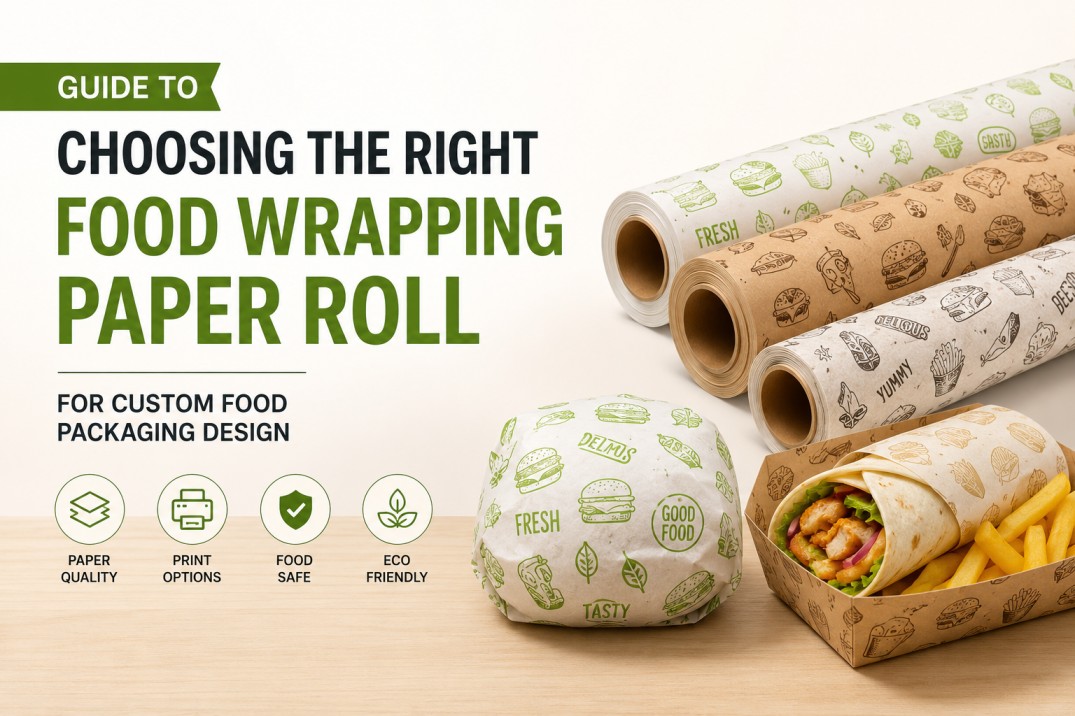
Rolls make sense for high-volume kitchens that need to cut custom sizes on demand and want the lowest per-unit cost at scale. Pre-cut sheets suit smaller outlets that don’t want the hassle of cutting paper to size. Foil still has its place for anything that needs reheating, but it isn’t compostable and it costs more per unit than a comparable paper roll. For most restaurants and cloud kitchens, a roll ends up being the more flexible and economical choice, especially once custom branding gets added into the mix.
If your menu includes items that need extra protection during transit, pairing a wrap with cling film for the outer layer is worth considering too.
Getting It Right the First Time
The businesses that get the most out of their packaging aren’t the ones that guess. They request samples, test them under real conditions and confirm compliance documentation before placing a bulk order rather than after a complaint lands. That one extra step at the start is usually the difference between reordering the same wrap for years and rethinking the whole decision three months in.
If you’re ready to move past trial and error, Anirudh Agro Industries supplies food-grade wrapping paper rolls built for exactly this kind of testing, with custom printing and bulk pricing available. Get in touch for sample rolls and a quote suited to your menu.
FAQs
What GSM is best for custom-printed food wraps?
Most custom-branded wraps perform well between 220–280 GSM, balancing print clarity with enough strength to handle folding and moderate oil exposure.
Can I get small trial batches before a bulk custom print order?
Reputable manufacturers typically offer sample rolls or short print runs so you can test branding and performance before committing to bulk food wrapping paper roll pricing.
Is eco-friendly wrapping paper as durable as laminated options?
Well-coated single-layer eco-friendly paper often matches laminate performance for standard food-contact use, while being easier to recycle or compost.