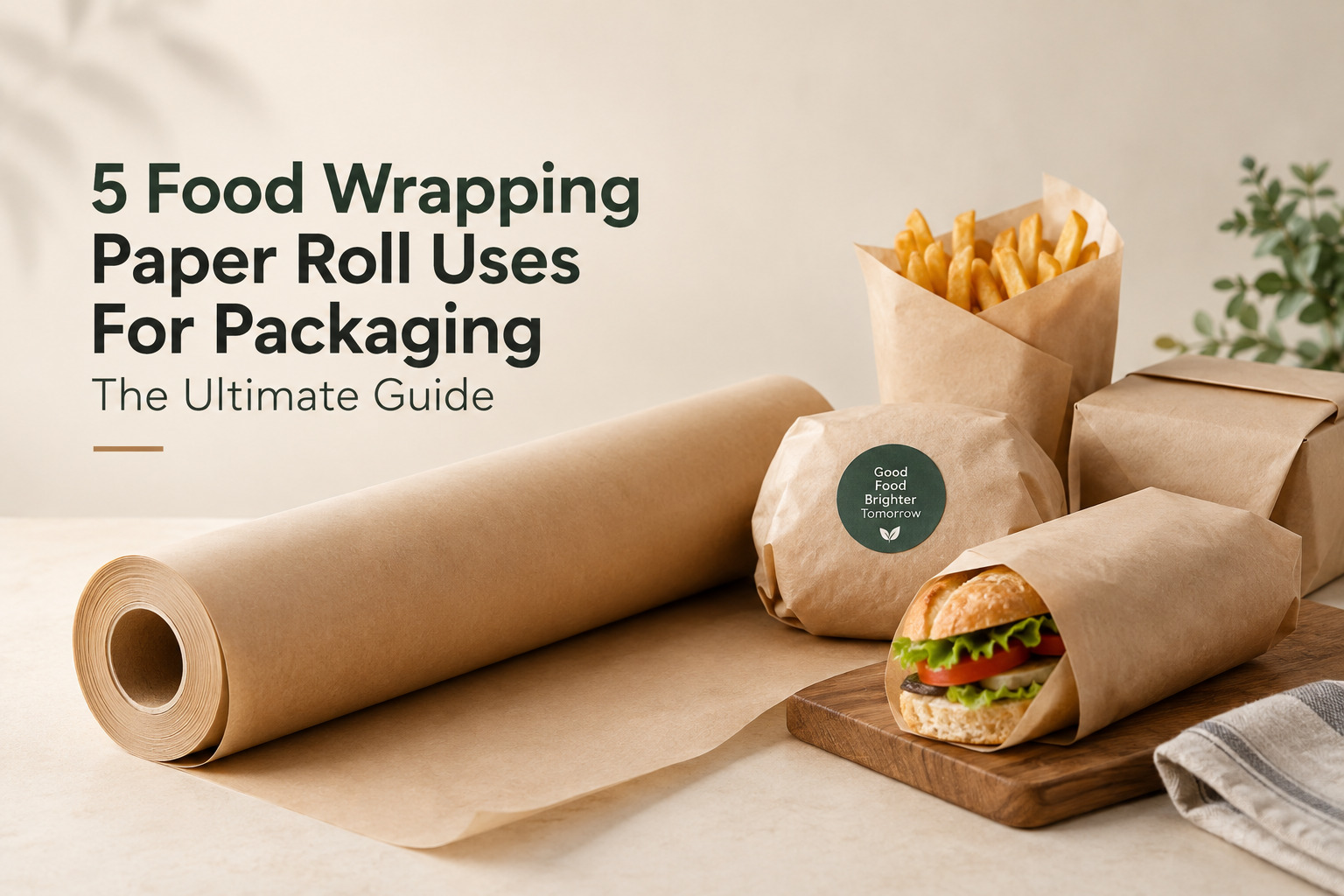
TLDR. Food wrapping paper roll use spans five practical jobs in packaging: wrapping fresh produce and bakery items, holding cooked and ready-to-eat food, lining boxes and containers, wrapping meat, fish and frozen products, and carrying branding for retail and takeaway orders. If you are searching for the right food packaging paper or food packaging materials for your business, this guide covers exactly where each roll fits and how to choose one that actually holds up on the shop floor.
I have walked through enough small food units and packaging lines to know one thing for certain. Most businesses do not think about wrapping paper until something goes wrong. A grease stain bleeds through, a fish smell lingers in the storage box, a customer complains that their bread arrived soggy. That is usually the moment someone finally asks what paper used to wrap food actually works best for their product.
This guide is written from that exact place the practical, hands-on side of packaging, not a theory lesson. No jargon dressed up to sound impressive, just what actually holds up once a product leaves the counter and travels through real hands, real weather, real delivery bags before it reaches someone’s table.
Why Food Wrapping Paper Still Matters In A Plastic Heavy Market
Plastic packaging is everywhere, but paper has not gone anywhere either for good reason. Buyers today notice packaging that feels honest, breathable, and safe for the product inside. Good food packaging materials do more than hold food together; they protect flavor, control moisture, and quietly build trust with a customer who never even meets the person who packed it. For a closer look at how different food grade papers are categorized and what each one is built for, this foodsafe paper breakdown is a solid starting reference.
For manufacturers and food businesses across India, this shift back toward paper based packaging has been steady rather than sudden. It is less about trend and more about buyers genuinely preferring something that feels cleaner in hand.
1. Wrapping Fresh Produce And Bakery Items
The most common food wrapping paper use starts right at the source fruit stalls, vegetable counters, and local bakeries. A roll of clean, food grade paper wraps bread, buns, and fresh produce without trapping moisture the way plastic often does.
Why Bakers Prefer Paper Over Film
Bread needs to breathe. When you cover a warm bread loaf in plastic, it becomes soft and damp after just a few hours. The reason why a lot of bakeries stick to paper is because it makes sure that the crust stays intact, despite plastic being readily available too.
What To Look For Here
Choose a lighter GSM paper for this job something soft enough to fold by hand quickly during a busy morning rush, since speed matters just as much as protection when a queue is building at the counter.
2. Wrapping Cooked And Ready To Eat Food
Once food moves from raw to cooked, the paper needs to work harder. Hot parathas, samosas, and other ready to eat items need paper used to wrap food that can handle oil, steam, and heat without falling apart in someone’s hands.
Grease Resistance Is Non Negotiable
A cheap paper roll will soak through within minutes of touching anything fried. That is a fast way to lose a customer’s trust, since nobody wants to open a bag with an oil stain spreading across the bottom. A proper greaseproof coating solves this without adding plastic into the mix.
Everyday Use Cases
Street food vendors, tiffin services, and small restaurants all lean on this category daily often without even thinking about which grade of paper they are buying, just knowing which roll holds up and which one lets them down by lunchtime.
3. Lining And Layering Inside Packaging Boxes
Not every use of wrapping paper is visible to the customer. A huge share of food packaging paper work happens quietly inside boxes and crates, as a liner between layers of product. Bakeries use it between trays of sweets; fruit exporters use it to cushion produce during transport.
Protecting Product During Transit
There is always a thin layer of paper separating the layers to prevent bruising and absorb excess moisture, which ensures that one item will not stain another. This is especially important in bulk packaging, as an error made at the manufacturing stage becomes apparent once the product gets to the retail level.
Where Businesses Get This Wrong
Skipping this step to save a little cost almost always costs more later in returned stock and damaged goods. A roll of the right lining paper is one of the cheapest insurance policies a packaging line can invest in.
4. Wrapping Meat, Fish And Frozen Items
This is where wrapping paper rolls for food need to perform under the toughest conditions. Meat and fish carry strong odors, high moisture, and demand a paper that holds shape even when damp or partially frozen.
Built For Cold Chain Handling
Coated and freezer grade paper resists tearing at low temperatures and keeps moisture from leaking through packaging during transport. Butchers and fish sellers rely on this daily often without knowing the technical name of what they are using, just trusting that it holds up through the cold storage process.
Odor Control Matters More Than People Realize
A good quality wrap also limits smell transfer, which protects everything else stored nearby in the same fridge or delivery crate. This single detail separates a professional setup from one customers quietly stop trusting.
A Detail Most Sellers Skip
Many small fish and meat sellers reuse the same storage crate for different products without rethinking the paper inside it. A stronger wrap prevents cross contamination of smell and moisture between items, which matters even more during warmer months when spoilage risk climbs fast.
5. Custom Branded Wrapping For Retail And Takeaway
The final major use brings branding into the picture. Printed food wrapping paper rolls give small and mid sized food businesses a way to look established without spending on expensive packaging design every single month.
Building Recognition Without A Big Budget
A simple logo printed on wrapping paper turns a plain takeaway order into something that looks intentional. Customers notice details like this more than businesses often expect, and it costs far less than most owners assume once ordered in bulk.
A Practical Tip From The Floor
Keep the design simple. A cluttered print looks cheaper than plain paper, while a clean logo with good spacing reads as premium even on a basic paper grade.
How To Choose The Right Roll For Your Business
Picking the correct paper is not complicated once you know what to check.
Check The GSM First
Lighter GSM works for dry bakery items usually somewhere in the thirty to forty range since it folds easily and does not add unnecessary bulk to a simple bread wrap. Heavier GSM, closer to fifty or sixty, suits meat, fish, and anything with grease or moisture involved, since a thinner sheet will tear or soak through before the product even reaches the customer.
Do not assume one GSM works across your entire product line. A bakery selling both dry biscuits and fresh cream pastries often needs two different rolls on hand, not one roll stretched across jobs it was never built for.
Confirm Food Safety Compliance
As per the guidelines of the FSSAI, everything that is used for packing, preparation, storage, wrapping, transportation, sales or services for food products should have food grade quality. This cannot be ignored by the business because it helps to protect the customer and the company itself. It is advised that one should ask for the document from the supplier proving the food grade quality of the material prior to approving a large order.
It distinguishes a serious business from the rest.
Test Before You Commit To Bulk
Order a small trial roll before placing a large order. What looks fine on paper no pun intended can behave differently once it meets real oil, moisture, and handling conditions on an actual production line.
This is exactly the kind of decision Anirudh Agro Industries helps food businesses work through every day, matching the right paper grade to the actual product instead of selling one generic roll for every use case.
For a closer look at how different food grade papers are categorized and what each one is built for, this food safe paper breakdown is a solid reference, along with the official FSSAI packaging guidelines for businesses that want the regulatory detail in full.
The Real Takeaway
Food wrapping paper is not just packaging it is the first physical impression a customer forms about your product before they even take a bite. Choosing the right roll for each job produce, cooked food, lining, cold storage, and branded retail protects the product and quietly protects the reputation behind it too.
Frequently Asked Questions
What is food grade wrapping paper?
It is paper that has been tested and cleared for direct contact with food, meaning no inks, dyes, or coatings that could leach into whatever it touches. Suppliers usually carry a certificate for this and, honestly, asking to see it before placing a bulk order saves a lot of trouble later.
Is wax paper safe for wrapping food?
For cold food, yes sandwiches, cheese, baked goods, all fine. Put it near heat though and the wax starts melting straight onto the food, so keep it away from ovens and microwaves entirely.
What GSM is best for food packaging paper?
Depends what you are wrapping. Bread and dry bakery items do fine around thirty to forty GSM. Anything oily or wet like fried snacks or meat needs something heavier, closer to fifty or sixty, as it just tears apart mid use at thinner weights.
Can butter paper be used for wrapping food?
It can a lot of bakeries already do this for pastries and sandwiches since grease does not soak through it easily. Just do not expect it to survive an oven; that is not what it is made for.
What is the difference between parchment paper and wax paper?
Parchment has a silicone coating and handles oven heat without a problem. Wax paper melts under that same heat because, well, it is coated in wax. People mix these up constantly it usually ends with a ruined tray of something in the oven.